Safety file
Quiet Nerves Side Effects and Drug Interactions, Ingredient by Ingredient
One capsule a day, 80 mg of magnesium and a 575 mg blend whose other five amounts are not printed: that is the whole exposure. This page sets out what each ingredient does at trial doses, what is plausible at label doses, which prescriptions deserve a pharmacist's look first, and which symptoms mean stop and call a clinician.
What a single daily capsule exposes you to
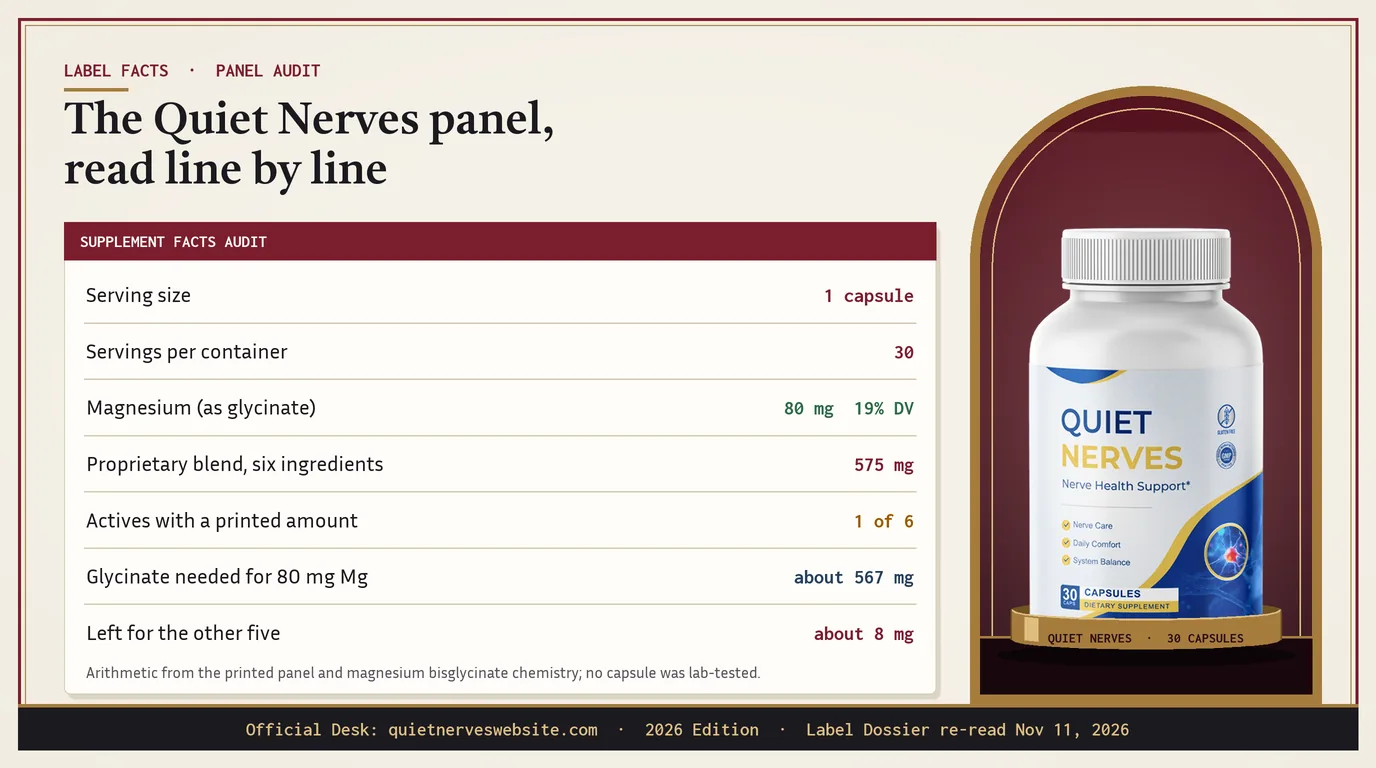
Safety starts with dose, and the Quiet Nerves label gives exactly one: 80 mg of magnesium, 19% of the Daily Value, per capsule [1]. The other five actives (alpha lipoic acid, butcher's broom extract, L-carnitine, turmeric extract and CoQ10) sit inside a 575 mg proprietary blend with no individual amounts. The serving is one capsule a day, and the bottle tells you not to exceed it.
The blend can still be bounded with arithmetic. Fully reacted magnesium glycinate is 14.1% magnesium by weight, so 80 mg of magnesium needs about 567 mg of it, which leaves roughly 8 mg of the 575 mg for the remaining five ingredients together. If the raw material is a buffered glycinate (about 18% magnesium), about 131 mg is left. Federal labeling rules list blend ingredients in descending order by weight [2], so each one has a ceiling. We did not assay a capsule; the working is laid out in the 575 mg blend guide and on the label page.
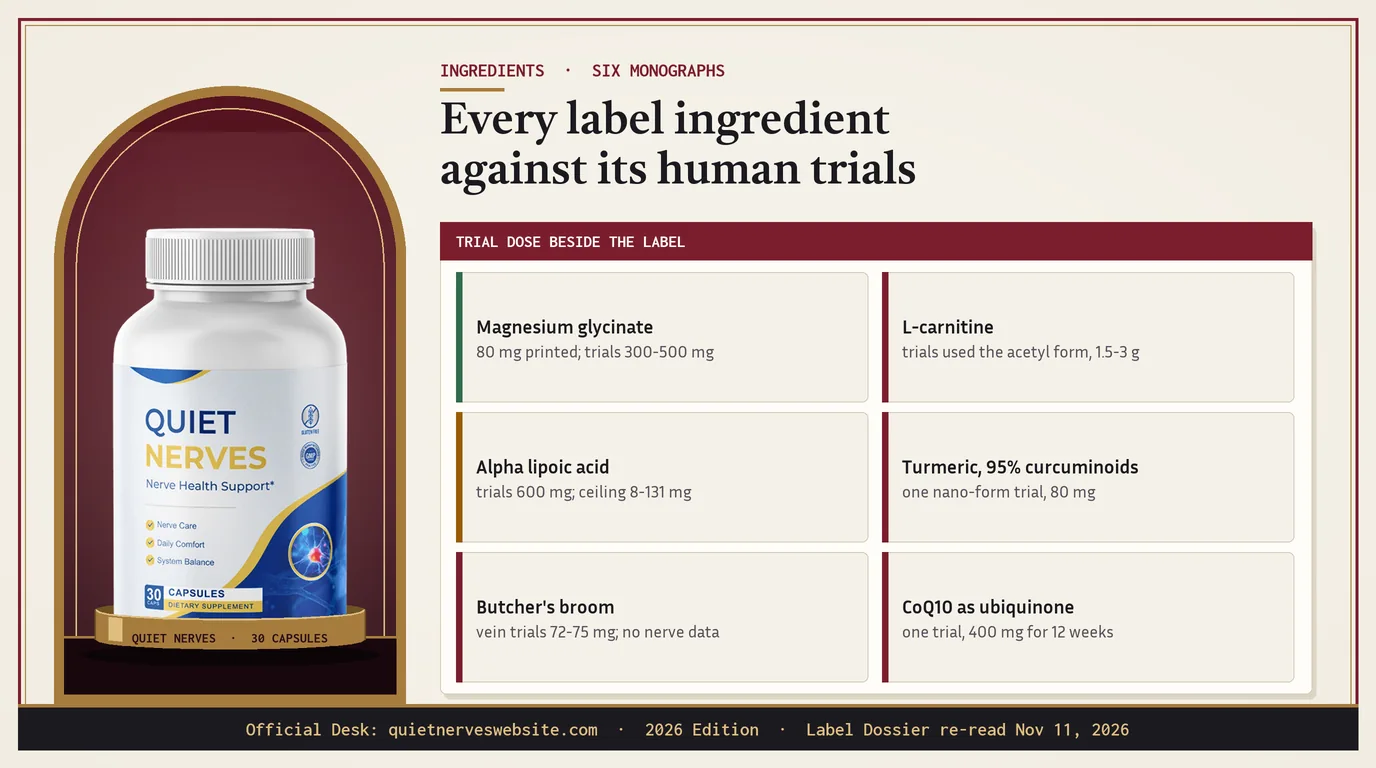
| Ingredient | Amount per capsule | Daily dose in human trials | Main tolerability signal at trial doses |
|---|---|---|---|
| Magnesium (as glycinate) | 80 mg, printed | 300 to 500 mg [3,4] | Loose stools, nausea, cramping; adult upper limit for supplemental magnesium is 350 mg a day [5] |
| Alpha lipoic acid | Not printed; ceiling 7.5 mg, or 131 mg if the glycinate is buffered | 600 mg [6] | Nausea, vomiting and vertigo that rose with dose; modest glucose lowering [7] |
| Butcher's broom extract | Not printed; ceiling 3.8 mg, or 65 mg | 72 to 75 mg in vein trials [8] | No side effects reported at the time of the European assessment; adults only [9] |
| L-carnitine | Not printed; ceiling 2.5 mg, or 44 mg | 1,500 to 3,000 mg of the acetyl form [10] | Nausea, cramps, diarrhea and a fishy body odor near 3 g a day [11] |
| Turmeric extract, 95% curcuminoids | Not printed; ceiling 1.9 mg, or 33 mg | 80 mg of nano-curcumin [12] to about 1 g of standard extract [13] | Digestive upset; rare liver injury reports [14] |
| CoQ10 (ubiquinone) | Not printed; ceiling 1.5 mg, or 26 mg | 200 to 400 mg [15,16] | Mild digestive upset [17]; observed safe level 1,200 mg a day [18] |
Two conclusions follow from the table. First, for five of the six actives the capsule delivers a small fraction of what volunteers swallowed in trials, which is the main reason our scorecard gives safety at the label dose an 8 out of 10 while giving dose adequacy a 2. Second, low dose is not the same as no risk: the reactions that matter most here (a mineral binding an antibiotic, a rare immune or liver reaction) do not depend on gram quantities.
Magnesium: the one amount you can audit
Eighty milligrams is a modest dose. The Office of Dietary Supplements sets the tolerable upper intake level for supplemental magnesium at 350 mg a day for adults, a ceiling that applies to supplements and medicines and not to food [5]. One capsule uses less than a quarter of it. The classic sign of excess is diarrhea, sometimes with nausea and abdominal cramping, and it is far more common with the large doses found in laxatives and antacids than with 80 mg.
What matters is the day's total. Add up every source: a multivitamin, a sleep or cramp formula, milk of magnesia, effervescent antacids. If the sum passes 350 mg of supplemental magnesium, loose stools become likely and the upper limit no longer protects you. The trials that tested magnesium for sleep, or for neuropathy in magnesium-depleted diabetes, used 300 to 500 mg a day [3,4], roughly four to six times the Quiet Nerves figure, so expect neither their benefits nor their bowel effects from one capsule.
Kidneys clear magnesium. ODS states that the risk of magnesium toxicity rises when kidney function is impaired, because the ability to remove the excess is reduced or lost [5]. Anyone with chronic kidney disease, on dialysis or told that their filtration rate is low should treat a magnesium-containing supplement as a prescription-level decision.
The glycinate form is marketed as gentle and well absorbed. The human data are thinner than the marketing: in twelve patients with ileal resection, magnesium diglycinate was absorbed about as well as magnesium oxide overall and better only in the poorest absorbers [19], and in a 60-day comparison magnesium citrate outperformed an amino-acid chelate [20]. Nothing in those studies points to a special hazard for glycinate.
Alpha lipoic acid: glucose effects and one rare immune reaction
At the 600 mg a day used in the nerve trials, alpha lipoic acid (ALA) is generally tolerated. In SYDNEY 2 the 600 mg arm had the best balance of benefit and tolerability, while nausea, vomiting and vertigo climbed in the 1,200 and 1,800 mg arms [6]. A Quiet Nerves capsule cannot hold more than about 8 mg under the strict reading of the label, or about 131 mg under the most generous one, so stomach effects of that kind are improbable.
ALA also nudges glucose. A pooled analysis of randomized trials found modest reductions in fasting glucose and HbA1c [7], and a six-month study in type 2 diabetes saw a dose-related trend between 300 and 1,200 mg a day [21]. For most people that is harmless. For someone on insulin or a sulfonylurea it is one more push in the same direction, and the sensible response is extra glucose checks during the first weeks, agreed with the prescriber.
The reaction worth knowing by name is insulin autoimmune syndrome, also called Hirata disease. The body makes antibodies against its own insulin and blood sugar drops unpredictably, with sweating, tremor, hunger or confusion. ALA is among the documented triggers [22], and a 2018 case report describes the syndrome in a patient taking an ALA supplement [23]. It is rare and appears to depend on inherited susceptibility more than on dose. The practical rule is short: unexplained low-sugar episodes after starting any ALA product mean stop the product and ask for testing.
Turmeric, L-carnitine, CoQ10 and butcher's broom
Turmeric extract
Curcuminoids are poorly absorbed. In a classic volunteer study, 2 g of curcumin taken alone was barely detectable in serum [24], and a dose-escalation study tolerated single doses up to 12 g while finding measurable blood levels only at 10 to 12 g [25]. Digestive upset is the complaint usually mentioned in safety summaries [26].
The liver question is newer. The U.S. Drug-Induced Liver Injury Network published ten cases of turmeric-associated liver injury, seven of them in carriers of one immune gene variant, HLA-B*35:01 [14], and the NIH LiverTox database carries a turmeric chapter that documents such cases [27]. The events appear rare against the number of people who take turmeric, and nothing ties them to Quiet Nerves, whose label lists no black pepper extract and whose turmeric share cannot exceed about 33 mg. They still set the watch list: unusual fatigue, nausea, dark urine, pale stools, itching or yellowing of the eyes after starting any turmeric product is a reason to stop and have liver enzymes checked. People with liver disease, gallstones or a blocked bile duct are a separate group who should ask a clinician before taking any turmeric extract. The European Medicines Agency's public summary limits traditional turmeric use to adults and lists dry mouth, flatulence and stomach irritation as possible side effects [28].
L-carnitine
ODS reports that carnitine supplements at about 3 g a day can cause nausea, vomiting, abdominal cramps, diarrhea and a fishy body odor [11]. The capsule's ceiling is 44 mg even on the generous reading, and only 14 to 18% of a supplemental dose is absorbed [29]. A longer-term question comes from research showing that gut bacteria convert L-carnitine into a compound, TMAO, that is associated with atherosclerosis [30]; at milligram intakes the contribution is small beside an ordinary diet that includes meat. The acetyl form, which this label does not list, worsened chemotherapy-related neuropathy at 3 g a day [31], which is why the interaction table flags oncology patients.
CoQ10
A safety review placed the observed safe level at 1,200 mg a day [18]. CoQ10 is fat soluble and slowly absorbed, with a half-life of about 33 hours [32], and trials at 100 to 200 mg a day recorded small falls in blood pressure [15,33]. As the last name in the blend it can supply no more than 1.5 to 26 mg here.
Butcher's broom
The European monograph accepts Ruscus aculeatus as a traditional remedy for heavy legs and its public summary says no side effects had been reported at the time of assessment [9]. The placebo-controlled vein trial used 72 to 75 mg of extract a day for 12 weeks [8]. Animal experiments point to an action on small blood vessels [34], yet we found no human interaction study, so its behavior alongside blood pressure medicines is unanswered, not cleared.
Prescription classes that deserve a pharmacist's five minutes
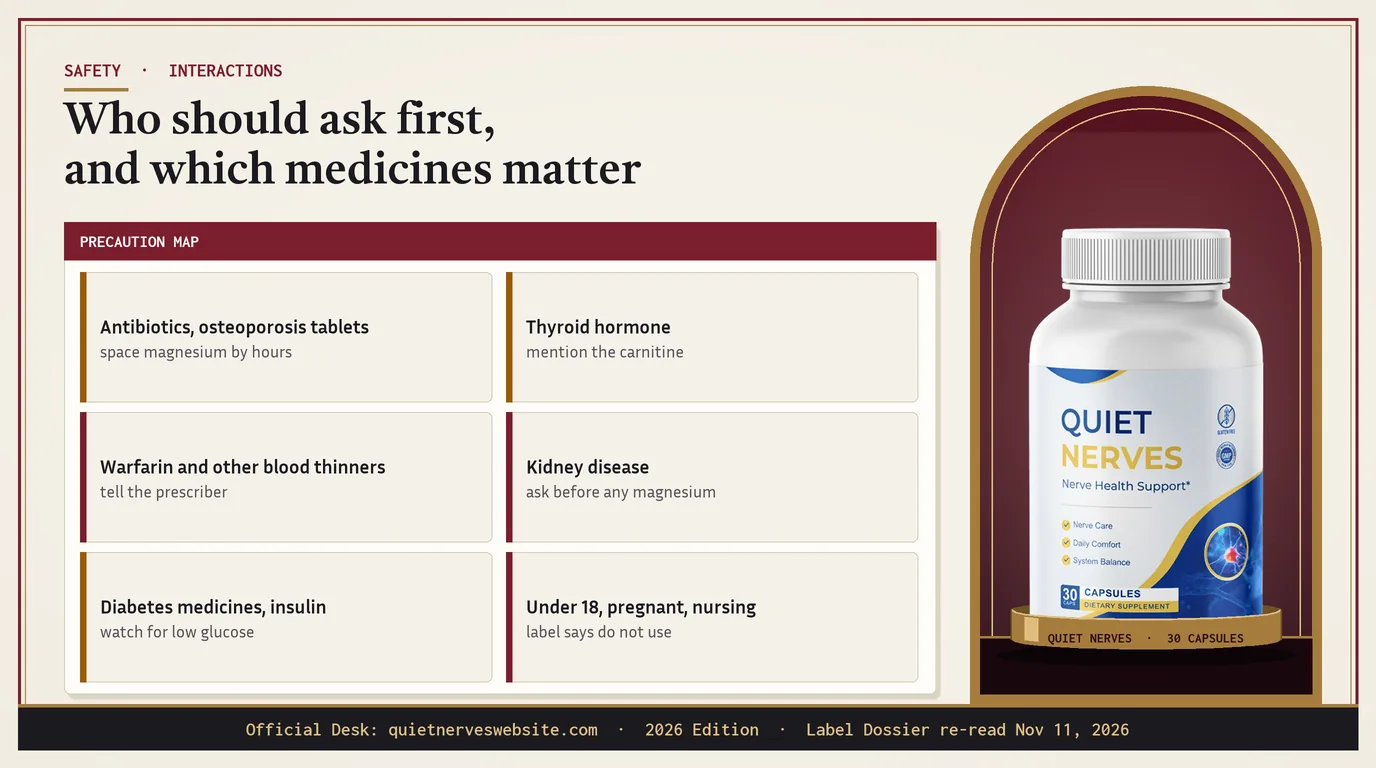
| Medicine class | Ingredient involved | What is known | Point to raise with a clinician or pharmacist |
|---|---|---|---|
| Tetracycline and quinolone antibiotics | Magnesium | Magnesium binds these antibiotics in the gut and cuts their absorption [5] | ODS advises taking the antibiotic at least 2 hours before or 4 to 6 hours after a magnesium supplement |
| Oral bisphosphonates such as alendronate | Magnesium | Magnesium can reduce absorption of the osteoporosis tablet [5] | Keep the two at least 2 hours apart |
| Diuretics and proton pump inhibitors | Magnesium | Loop and thiazide diuretics raise urinary magnesium loss, potassium-sparing types lower it; long-term acid suppression has been tied to low magnesium [5] | Ask whether a magnesium level is worth checking before adding or dropping any source |
| Warfarin, acenocoumarol, antiplatelet drugs | L-carnitine, CoQ10, turmeric | One case report of L-carnitine potentiating acenocoumarol [35]; case reports of CoQ10 weakening warfarin [36] against a crossover trial that found no INR change at 100 mg a day [37]; rat data on curcumin altering warfarin and clopidogrel handling [38] | Tell the anticoagulation clinic before the first capsule and again on stopping; expect an extra INR check |
| Insulin, sulfonylureas and other glucose-lowering medicines | Alpha lipoic acid, CoQ10 | ALA modestly lowers fasting glucose and HbA1c in pooled trials [7]; rare insulin autoimmune syndrome linked to ALA [22]; CoQ10 at 200 mg a day lowered HbA1c in one trial [15] | Check glucose more often in the first weeks; report unexplained lows |
| Thyroid hormone | L-carnitine, magnesium | L-carnitine at 2 to 4 g a day blunted thyroid hormone action in a randomized trial [39]; pharmacists commonly space mineral supplements from levothyroxine | Ask about a gap of about four hours and whether a thyroid test is warranted |
| Taxane chemotherapy | Carnitine (acetyl form studied) | Acetyl-L-carnitine at 3 g a day worsened taxane neuropathy at 24 weeks in 409 women [31] | Add no carnitine product during chemotherapy without the oncology team's agreement |
| Blood pressure medicines | CoQ10, butcher's broom | CoQ10 at 100 to 200 mg a day lowered systolic pressure modestly [15,33]; no human interaction data for Ruscus | Mention the capsule at the next blood pressure review; report dizziness |
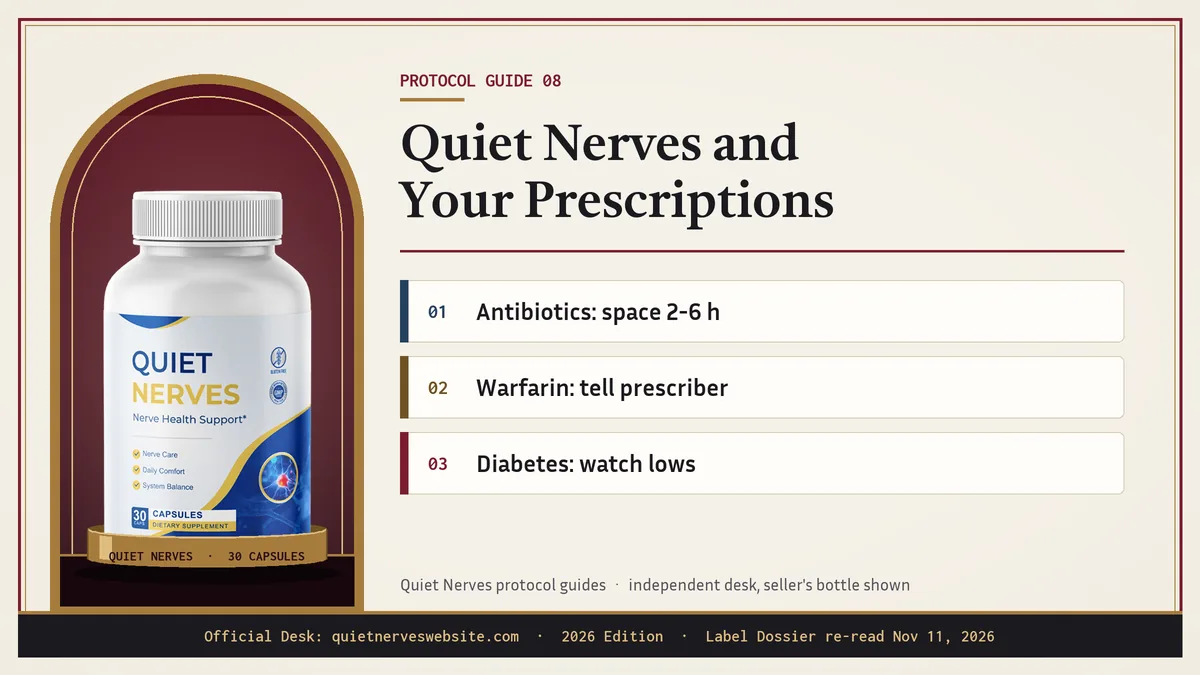
Read the table as a list of questions to take to a professional, not as clearance. The evidence behind the rows is uneven: the antibiotic and bisphosphonate rows rest on well-understood binding chemistry and apply to any magnesium-containing product, large or small, while the anticoagulant rows rest on case reports, one small crossover trial and animal work. Most of the signals were recorded at gram doses that this capsule cannot contain. That lowers the odds; it does not move the decision away from the person who manages your prescriptions. A longer walk-through sits in Quiet Nerves and your prescriptions.
Who should leave the bottle closed
The label draws the first line itself: not for anyone under 18, and not for pregnant or nursing mothers [1]. It also tells people who take medication or have a medical condition to consult a physician first. From the ingredient files above we would add the following groups, each for a stated reason.
- Chronic kidney disease or dialysis. Magnesium clearance is reduced [5].
- Surgery within the next few weeks. FDA notes that patients may be asked to stop supplements two to three weeks before a procedure [40]; give the surgical team the full ingredient list.
- Liver or biliary disease, or a past liver reaction to any supplement. Turmeric is the reason [14,27].
- Taxane chemotherapy, current or planned. Carnitine is the reason [31].
- Episodes of unexplained low blood sugar. Alpha lipoic acid is the reason [22].
- Anticoagulant therapy, unless the clinic that manages it knows about the capsule.
- A known allergy to any listed active or to the capsule materials (hypromellose, microcrystalline cellulose, magnesium stearate, stearic acid, silicon dioxide).
- Nerve symptoms that have never been examined. Burning, tingling and numbness have many causes, several of them treatable and a few urgent [41].
Symptoms that end the trial run
Stop the capsule and contact a clinician or pharmacist the same day if any of these appears after you start:
- diarrhea, nausea or stomach pain that lasts more than two or three days
- a rash, hives or itching
- dark urine, pale stools, or yellowing of the eyes or skin
- shakiness, sweating or confusion that improves when you eat something sweet
- dizziness, fainting or an unusually slow or irregular pulse
- unexpected bruising, nosebleeds or bleeding gums, above all if you take a blood thinner
Call emergency services (911 in the United States) instead of waiting for an appointment if any of these appears, with or without the supplement:
- sudden weakness, a drooping face, slurred speech or loss of vision
- loss of bladder or bowel control, or numbness around the groin and inner thighs
- weakness or numbness that climbs the legs over hours or days
- swelling of the lips, tongue or throat, or trouble breathing
- chest pain or pressure
Reporting a reaction and keeping a record
If you believe the capsule caused a problem, three reports are worth making. Tell the clinician who knows your history, so the event enters your record. Tell FDA through MedWatch, the agency's safety reporting program, which takes voluntary reports from consumers online or by phone at 1-800-FDA-1088 [47]. And tell the seller at the address printed on the bottle, [email protected]; the label gives a city, a ZIP code and that mailbox, but no telephone number and no street address [1].
A useful report contains the product name, the lot number and expiry date stamped on your bottle (the published artwork shows only a placeholder code, so we cannot tell you what a real one looks like), the date of the first capsule, the date and nature of the reaction, and every other medicine and supplement you take. Keep the bottle and what is left in it. Photographs of the label and the seal take one minute and settle later arguments.
Our desk cannot take medical reports or give individual advice. For a refund after a reaction, the steps are on the refund page, and the seller's channels are listed in the support directory.
Questions readers ask
Does Quiet Nerves have side effects?
It can, although the label dose keeps exposure low. The only printed amount is 80 mg of magnesium, well under the 350 mg adult upper limit for supplemental magnesium [5], and the other five actives share what is left of a 575 mg blend. Digestive upset is the most plausible complaint. Rare reactions tied to alpha lipoic acid (low blood sugar from insulin autoimmune syndrome) and to turmeric (liver injury) have been reported with other products [22,14]. The seller's statement that the capsule is generally well tolerated is not backed by a published study of this product.
Can I take Quiet Nerves with metformin, insulin or other diabetes medicines?
Only with the prescriber's agreement. Alpha lipoic acid modestly lowers fasting glucose and HbA1c in pooled trials [7], so it adds to what the medicine already does, and people on insulin or a sulfonylurea should check glucose more often for the first weeks. Separately, long-term metformin use is linked to vitamin B12 deficiency, a well-known cause of tingling feet [45]; ask for a B12 level before assuming a supplement is the answer.
Is Quiet Nerves safe with warfarin or other blood thinners?
Not without your anticoagulation clinic knowing about it. L-carnitine potentiated the related drug acenocoumarol in one case report [35], CoQ10 has case reports of weakening warfarin [36] although a controlled crossover trial at 100 mg a day found no change in INR [37], and curcumin altered warfarin handling in rats [38]. The amounts in this capsule are small, but INR is sensitive, so report both starting and stopping.
Can 80 mg of magnesium cause diarrhea?
Rarely on its own. Loose stools are the classic sign of too much supplemental magnesium, and the adult upper limit is 350 mg a day [5]. Trouble starts when 80 mg is stacked on a multivitamin, a sleep formula or a magnesium-based antacid or laxative. Add up the day's total before blaming or excusing the capsule.
How long should I wait between Quiet Nerves and an antibiotic?
For tetracycline and quinolone antibiotics, ODS advises taking the antibiotic at least 2 hours before or 4 to 6 hours after a magnesium-containing supplement [5]. Oral osteoporosis tablets such as alendronate need at least 2 hours of separation. Your pharmacist can confirm the gap for the exact product prescribed; for a short antibiotic course, many simply suggest pausing the supplement.
Who should not take Quiet Nerves?
By the bottle's own warning, anyone under 18 and anyone pregnant or nursing [1]. We would add people with kidney disease, people with liver or biliary disease, anyone on taxane chemotherapy, anyone facing surgery in the next few weeks and anyone whose nerve symptoms have not been examined. The reasons are given above, group by group.
References
Numbered in order of first citation on this page. Study records were checked against PubMed on November 11, 2026; seller documents are quoted as read on the same day.
- Quiet Nerves. Bottle label artwork with Supplement Facts panel, as published on the seller's order page. Read November 11, 2026. Source
- 21 CFR 101.36. Nutrition labeling of dietary supplements (proprietary blends listed in descending order of predominance by weight). Source
- De Leeuw I, Engelen W, De Block C, et al. Long term magnesium supplementation influences favourably the natural evolution of neuropathy in Mg-depleted type 1 diabetic patients (T1dm). Magnes Res. 2004;17(2):109-14. PMID 15319143. PubMed
- Abbasi B, Kimiagar M, Sadeghniiat K, et al. The effect of magnesium supplementation on primary insomnia in elderly: A double-blind placebo-controlled clinical trial. J Res Med Sci. 2012;17(12):1161-9. PMID 23853635. PubMed
- NIH Office of Dietary Supplements. Magnesium: Fact Sheet for Health Professionals. Updated January 6, 2026. Source
- Ziegler D, Ametov A, Barinov A, et al. Oral treatment with alpha-lipoic acid improves symptomatic diabetic polyneuropathy: the SYDNEY 2 trial. Diabetes Care. 2006;29(11):2365-70. PMID 17065669. PubMed
- Rahimlou M, Asadi M, Banaei Jahromi N, et al. Alpha-lipoic acid (ALA) supplementation effect on glycemic and inflammatory biomarkers: A Systematic Review and meta- analysis. Clin Nutr ESPEN. 2019;32:16-28. PMID 31221283. PubMed
- Vanscheidt W, Jost V, Wolna P, et al. Efficacy and safety of a Butcher's broom preparation (Ruscus aculeatus L. extract) compared to placebo in patients suffering from chronic venous insufficiency. Arzneimittelforschung. 2002;52(4):243-50. PMID 12040966. PubMed
- European Medicines Agency, Committee on Herbal Medicinal Products. Rusci rhizoma (butcher's broom): herbal monograph. Source
- Sima AA, Calvani M, Mehra M, et al. Acetyl-L-carnitine improves pain, nerve regeneration, and vibratory perception in patients with chronic diabetic neuropathy: an analysis of two randomized placebo-controlled trials. Diabetes Care. 2005;28(1):89-94. PMID 15616239. PubMed
- NIH Office of Dietary Supplements. Carnitine: Fact Sheet for Health Professionals. Source
- Asadi S, Gholami MS, Siassi F, et al. Nano curcumin supplementation reduced the severity of diabetic sensorimotor polyneuropathy in patients with type 2 diabetes mellitus: A randomized double-blind placebo- controlled clinical trial. Complement Ther Med. 2019;43:253-260. PMID 30935539. PubMed
- Daily JW, Yang M, Park S. Efficacy of Turmeric Extracts and Curcumin for Alleviating the Symptoms of Joint Arthritis: A Systematic Review and Meta-Analysis of Randomized Clinical Trials. J Med Food. 2016;19(8):717-29. PMID 27533649. PubMed
- Halegoua-DeMarzio D, Navarro V, Ahmad J, et al. Liver Injury Associated with Turmeric-A Growing Problem: Ten Cases from the Drug-Induced Liver Injury Network [DILIN]. Am J Med. 2023;136(2):200-206. PMID 36252717. PubMed
- Hodgson JM, Watts GF, Playford DA, et al. Coenzyme Q10 improves blood pressure and glycaemic control: a controlled trial in subjects with type 2 diabetes. Eur J Clin Nutr. 2002;56(11):1137-42. PMID 12428181. PubMed
- Hernández-Ojeda J, Cardona-Muñoz EG, Román-Pintos LM, et al. The effect of ubiquinone in diabetic polyneuropathy: a randomized double-blind placebo-controlled study. J Diabetes Complications. 2012;26(4):352-8. PMID 22595020. PubMed
- National Center for Complementary and Integrative Health. Coenzyme Q10. Source
- Hidaka T, Fujii K, Funahashi I, et al. Safety assessment of coenzyme Q10 (CoQ10). Biofactors. 2008;32(1-4):199-208. PMID 19096117. PubMed
- Schuette SA, Lashner BA, Janghorbani M. Bioavailability of magnesium diglycinate vs magnesium oxide in patients with ileal resection. JPEN J Parenter Enteral Nutr. 1994;18(5):430-5. PMID 7815675. PubMed
- Walker AF, Marakis G, Christie S, et al. Mg citrate found more bioavailable than other Mg preparations in a randomised, double-blind study. Magnes Res. 2003;16(3):183-91. PMID 14596323. PubMed
- Porasuphatana S, Suddee S, Nartnampong A, et al. Glycemic and oxidative status of patients with type 2 diabetes mellitus following oral administration of alpha-lipoic acid: a randomized double-blinded placebo-controlled study. Asia Pac J Clin Nutr. 2012;21(1):12-21. PMID 22374556. PubMed
- Censi S, Mian C, Betterle C. Insulin autoimmune syndrome: from diagnosis to clinical management. Ann Transl Med. 2018;6(17):335. PMID 30306074. PubMed
- Cappellani D, Sardella C, Campopiano MC, et al. Spontaneously remitting insulin autoimmune syndrome in a patient taking alpha-lipoic acid. Endocrinol Diabetes Metab Case Rep. 2018;2018. PMID 30532997. PubMed
- Shoba G, Joy D, Joseph T, et al. Influence of piperine on the pharmacokinetics of curcumin in animals and human volunteers. Planta Med. 1998;64(4):353-6. PMID 9619120. PubMed
- Lao CD, Ruffin MT 4th, Normolle D, et al. Dose escalation of a curcuminoid formulation. BMC Complement Altern Med. 2006;6:10. PMID 16545122. PubMed
- National Center for Complementary and Integrative Health. Turmeric: Usefulness and Safety. Source
- LiverTox: Clinical and Research Information on Drug-Induced Liver Injury. Turmeric. National Institute of Diabetes and Digestive and Kidney Diseases. PMID 31643876. Source
- European Medicines Agency, Committee on Herbal Medicinal Products. Curcumae longae rhizoma (turmeric): herbal monograph. Source
- Rebouche CJ. Kinetics, pharmacokinetics, and regulation of L-carnitine and acetyl-L-carnitine metabolism. Ann N Y Acad Sci. 2004;1033:30-41. PMID 15591001. PubMed
- Koeth RA, Wang Z, Levison BS, et al. Intestinal microbiota metabolism of L-carnitine, a nutrient in red meat, promotes atherosclerosis. Nat Med. 2013;19(5):576-85. PMID 23563705. PubMed
- Hershman DL, Unger JM, Crew KD, et al. Randomized double-blind placebo-controlled trial of acetyl-L-carnitine for the prevention of taxane-induced neuropathy in women undergoing adjuvant breast cancer therapy. J Clin Oncol. 2013;31(20):2627-33. PMID 23733756. PubMed
- Bhagavan HN, Chopra RK. Coenzyme Q10: absorption, tissue uptake, metabolism and pharmacokinetics. Free Radic Res. 2006;40(5):445-53. PMID 16551570. PubMed
- Zhao D, Liang Y, Dai S, et al. Dose-Response Effect of Coenzyme Q10 Supplementation on Blood Pressure among Patients with Cardiometabolic Disorders: A Grading of Recommendations Assessment, Development, and Evaluation (GRADE)-Assessed Systematic Review and Meta-Analysis of Randomized Controlled Trials. Adv Nutr. 2022;13(6):2180-2194. PMID 36130103. PubMed
- Bouskela E, Cyrino FZ, Marcelon G. Possible mechanisms for the inhibitory effect of Ruscus extract on increased microvascular permeability induced by histamine in hamster cheek pouch. J Cardiovasc Pharmacol. 1994;24(2):281-5. PMID 7526061. PubMed
- Martinez E, Domingo P, Roca-Cusachs A. Potentiation of acenocoumarol action by L-carnitine. J Intern Med. 1993;233(1):94. PMID 8429297. PubMed
- Heck AM, DeWitt BA, Lukes AL. Potential interactions between alternative therapies and warfarin. Am J Health Syst Pharm. 2000;57(13):1221-7; quiz 1228-30. PMID 10902065. PubMed
- Engelsen J, Nielsen JD, Hansen KF. [Effect of Coenzyme Q10 and Ginkgo biloba on warfarin dosage in patients on long-term warfarin treatment. A randomized, double-blind, placebo-controlled cross-over trial]. Ugeskr Laeger. 2003;165(18):1868-71. PMID 12772396. PubMed
- Liu AC, Zhao LX, Lou HX. Curcumin alters the pharmacokinetics of warfarin and clopidogrel in Wistar rats but has no effect on anticoagulation or antiplatelet aggregation. Planta Med. 2013;79(11):971-7. PMID 23807811. PubMed
- Benvenga S, Ruggeri RM, Russo A, et al. Usefulness of L-carnitine, a naturally occurring peripheral antagonist of thyroid hormone action, in iatrogenic hyperthyroidism: a randomized, double-blind, placebo-controlled clinical trial. J Clin Endocrinol Metab. 2001;86(8):3579-94. PMID 11502782. PubMed
- U.S. Food and Drug Administration. Mixing Medications and Dietary Supplements Can Endanger Your Health. Source
- National Institute of Neurological Disorders and Stroke. Peripheral Neuropathy. Source
- National Institute of Diabetes and Digestive and Kidney Diseases. Diabetic Neuropathy. Source
- MedlinePlus. Peripheral Neuropathy. U.S. National Library of Medicine. Source
- Staff NP, Windebank AJ. Peripheral neuropathy due to vitamin deficiency, toxins, and medications. Continuum (Minneap Minn). 2014;20(5 Peripheral Nervous System Disorders):1293-306. PMID 25299283. PubMed
- Aroda VR, Edelstein SL, Goldberg RB, et al. Long-term Metformin Use and Vitamin B12 Deficiency in the Diabetes Prevention Program Outcomes Study. J Clin Endocrinol Metab. 2016;101(4):1754-61. PMID 26900641. PubMed
- England JD, Gronseth GS, Franklin G, et al. Practice Parameter: evaluation of distal symmetric polyneuropathy: role of laboratory and genetic testing (an evidence-based review). Report of the American Academy of Neurology, American Association of Neuromuscular and Electrodiagnostic Medicine, and American Academy of Physical Medicine and Rehabilitation. Neurology. 2009;72(2):185-92. PMID 19056666. PubMed
- U.S. Food and Drug Administration. MedWatch: The FDA Safety Information and Adverse Event Reporting Program. Source