Ingredient monographs
Quiet Nerves ingredients: six monographs against the trial record
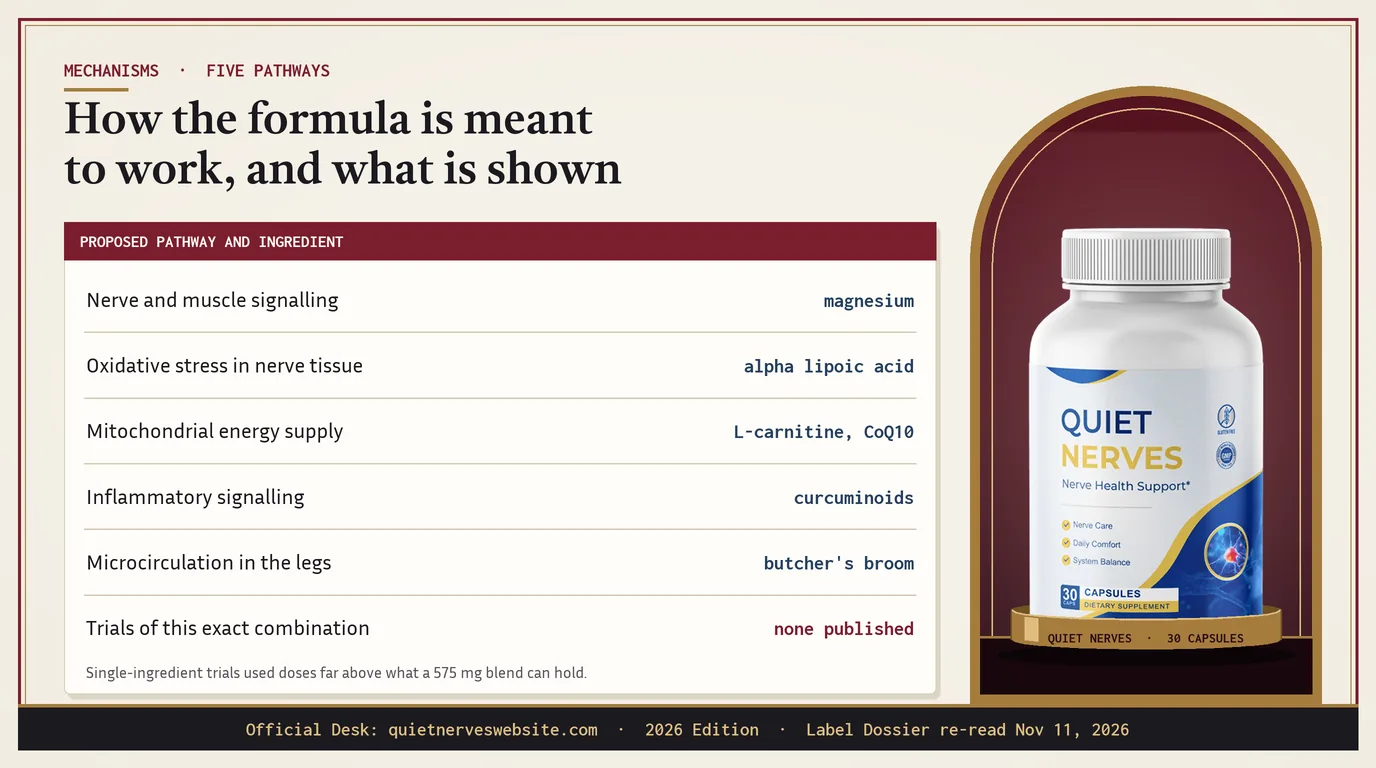
Quiet Nerves lists six active ingredients and prints an amount for one. For each, in label order, this page sets out what the compound is, how it is absorbed, what human trials found and at which doses, where the results were neutral or negative, and how much of it a 575 mg blend could hold. Magnesium is the only entry that survives the comparison intact.
How to read these six monographs
The entries below follow label order, which by federal rule is also weight order inside the blend. [1] Each one answers the same six questions: what the compound is, how well it is absorbed, what human trials found, where results were neutral or negative, how the trial dose compares with what the blend can hold, and what cautions apply.
Two ground rules keep the comparison honest. First, only human trials count as evidence of benefit; animal and cell studies are labeled as such and treated as background. Second, a trial of one ingredient at a higher dose is not a trial of this capsule. Quiet Nerves as a finished product has no published clinical study, and the seller's own reference page cites no study of five of the six ingredients. [2]
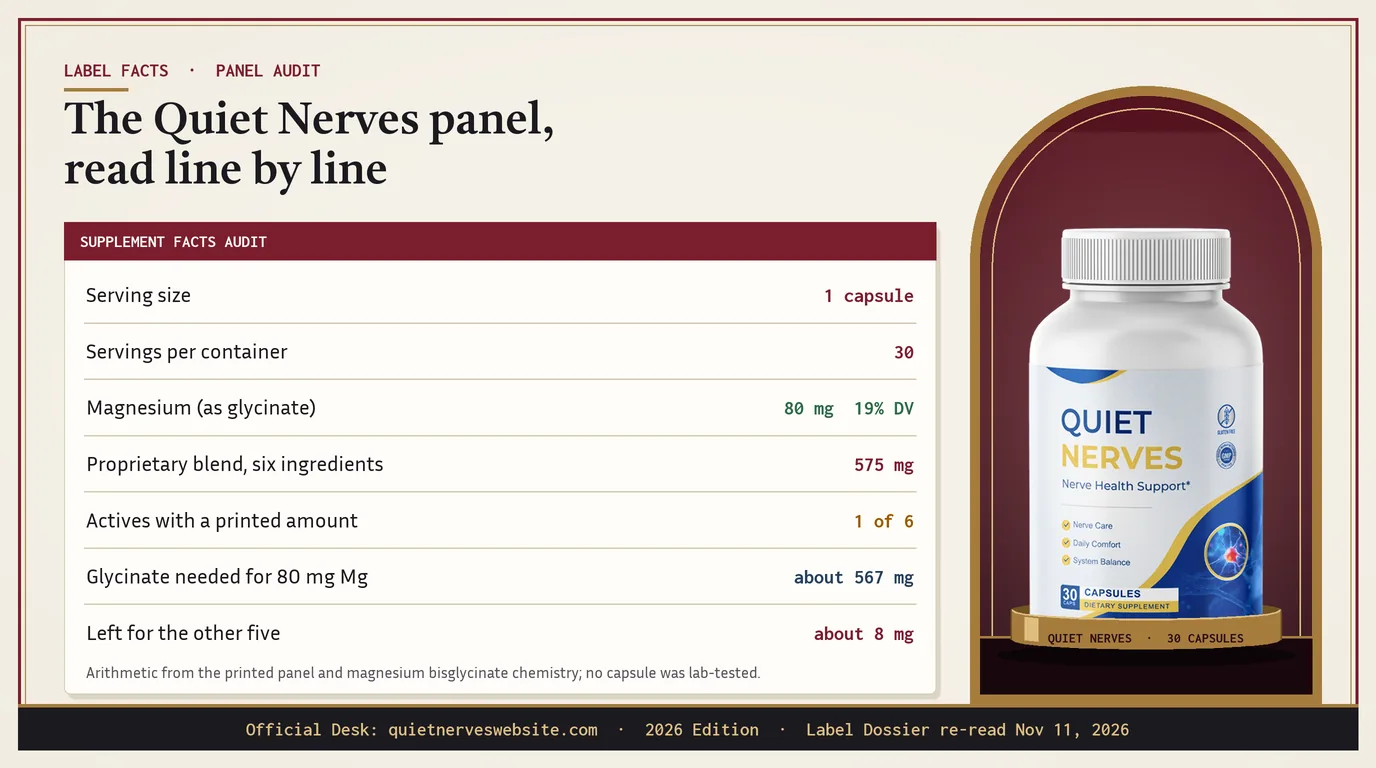
The yardstick for dose is the arithmetic in our label audit. The panel prints 80 mg of magnesium and a 575 mg blend that includes the magnesium glycinate itself. If that glycinate is a fully reacted grade (14.1% magnesium), it weighs about 567 mg and about 8 mg is left for the other five actives combined. If it is a buffered grade near 18% magnesium, about 131 mg is left. Label order then caps each ingredient: all of the remainder for the first of the five, half for the next, a third for the one after, and so on. We quote both ceilings throughout as the strict and the generous reading.
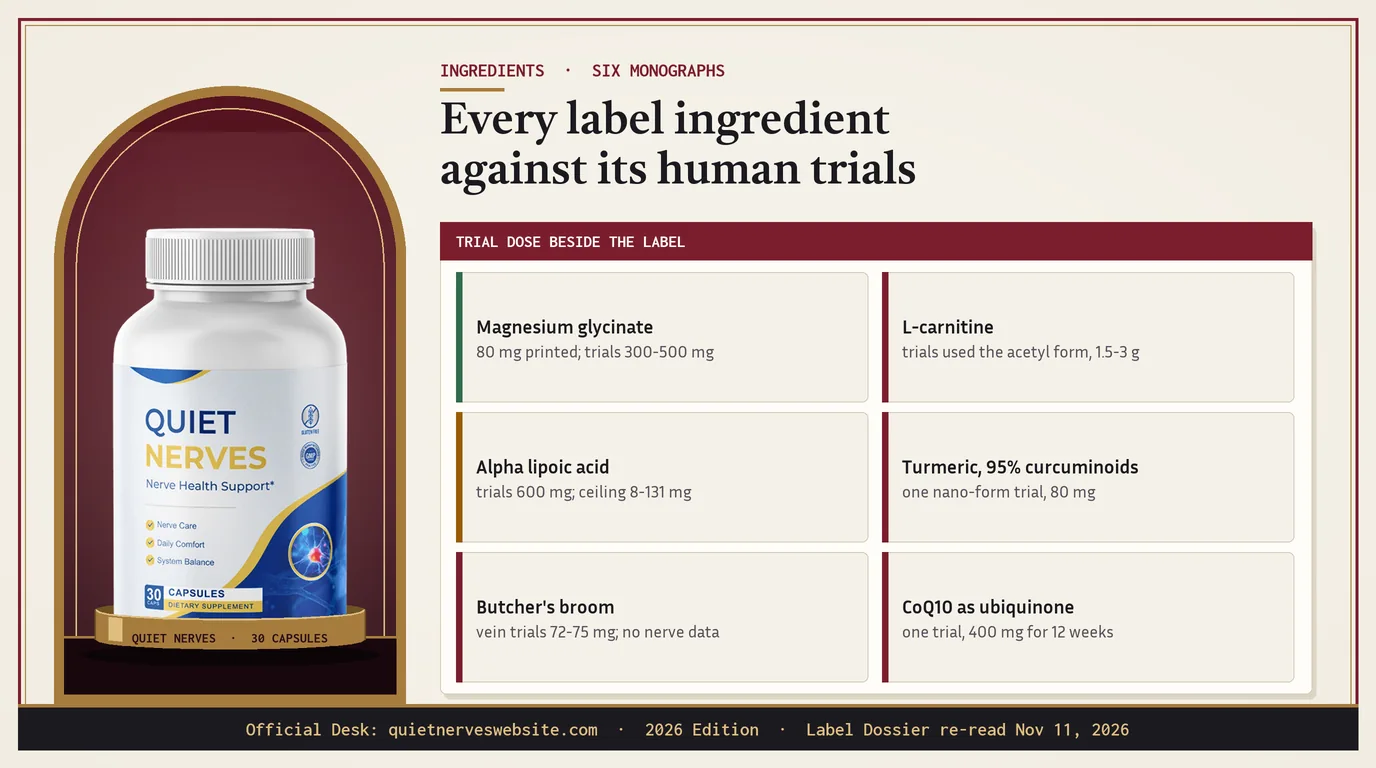
| Ingredient | Printed amount | Closest human evidence for nerves | Dose in that evidence | Blend ceiling, strict to generous |
|---|---|---|---|---|
| Magnesium glycinate | 80 mg of magnesium | Open 5-year study in magnesium-depleted type 1 diabetes | 300 mg a day | Not needed: amount printed |
| Alpha lipoic acid | Not printed | SYDNEY 2, NATHAN 1, Cochrane 2024 | 600 mg a day or more | 7.5 to 131 mg |
| Butcher's broom extract | Not printed | None for nerves; vein trials only | 72 to 75 mg a day | 3.8 to 65 mg |
| L-carnitine | Not printed | Trials of acetyl-L-carnitine, a different form | 1,500 to 3,000 mg a day | 2.5 to 44 mg |
| Turmeric extract, 95% curcuminoids | Not printed | One trial of nano-curcumin | 80 mg a day, enhanced form | 1.9 to 33 mg |
| Coenzyme Q10 (ubiquinone) | Not printed | One 12-week trial in 49 patients | 400 mg a day | 1.5 to 26 mg |
Magnesium glycinate: the one amount you can check
What it is. Magnesium bound to two molecules of glycine, also sold as magnesium bisglycinate. The body uses magnesium as a cofactor in more than 300 enzyme systems, including those behind nerve conduction and muscle contraction, and adult requirements run from 310 to 420 mg a day depending on age and sex. [3] The label's 80 mg is elemental magnesium, which corresponds to roughly 567 mg of a fully reacted glycinate. [4]
Absorption. The glycinate form has a reputation for superior uptake that human data only partly support. In 12 patients with ileal resection, magnesium diglycinate and magnesium oxide were absorbed to a similar degree overall, with the chelate doing better in the patients whose absorption was worst. [5] A 60-day comparison in 46 volunteers found magnesium citrate more bioavailable than both an amino-acid chelate and the oxide. [6] Oxide itself is poorly absorbed, with a fractional absorption of about 4% in one study, [7] and reviews agree that the proportion absorbed rises as the dose falls, which favors a small dose such as 80 mg. [8,9]
Human trials. For sleep, 500 mg a day for eight weeks improved insomnia measures in 46 older adults, [10] and a meta-analysis of three trials in 151 older adults found sleep onset about 17 minutes faster, on evidence its authors graded as low quality. [11] For subjective anxiety and stress, a systematic review judged the evidence suggestive but poor. [12] For nerves specifically, the closest human data are an open five-year study in which 300 mg a day was followed by less progression of neuropathy in magnesium-depleted adults with type 1 diabetes. [13]
Neutral and negative results. A randomized trial in 45 patients with neuropathic pain found no difference from placebo in pain intensity after four weeks of oral magnesium. [14] A Cochrane review concluded that magnesium is unlikely to help idiopathic muscle cramps in older adults. [15] The pain signal that sales pages lean on comes largely from animal work, such as a rat model of diabetic neuropathic pain. [16]
Dose check. 80 mg is 19% of the Daily Value: a real contribution to intake, about a quarter of the amount used in the diabetes study and about a sixth of the insomnia dose. It sits far below the 350 mg upper level for supplemental magnesium. [3]
Cautions. Kidney disease reduces magnesium clearance. Magnesium can bind tetracycline and quinolone antibiotics and oral bisphosphonates, so those medicines need to be spaced away from it, and diuretics and proton pump inhibitors alter magnesium status. [3] Longer read: magnesium glycinate at 80 mg.
Alpha lipoic acid: a real trial record, built at 600 mg
What it is. A sulfur-containing fatty acid, also called thioctic acid, that the body makes in small amounts as a cofactor for mitochondrial enzymes. As a supplement it is studied mainly as an antioxidant in diabetic nerve damage, where it has the deepest clinical literature of anything on this label. [17]
Absorption. Oral alpha lipoic acid is absorbed quickly and cleared quickly, with a short plasma half-life, [18] and food lowers its bioavailability, which is why trial protocols gave it before meals. [19]
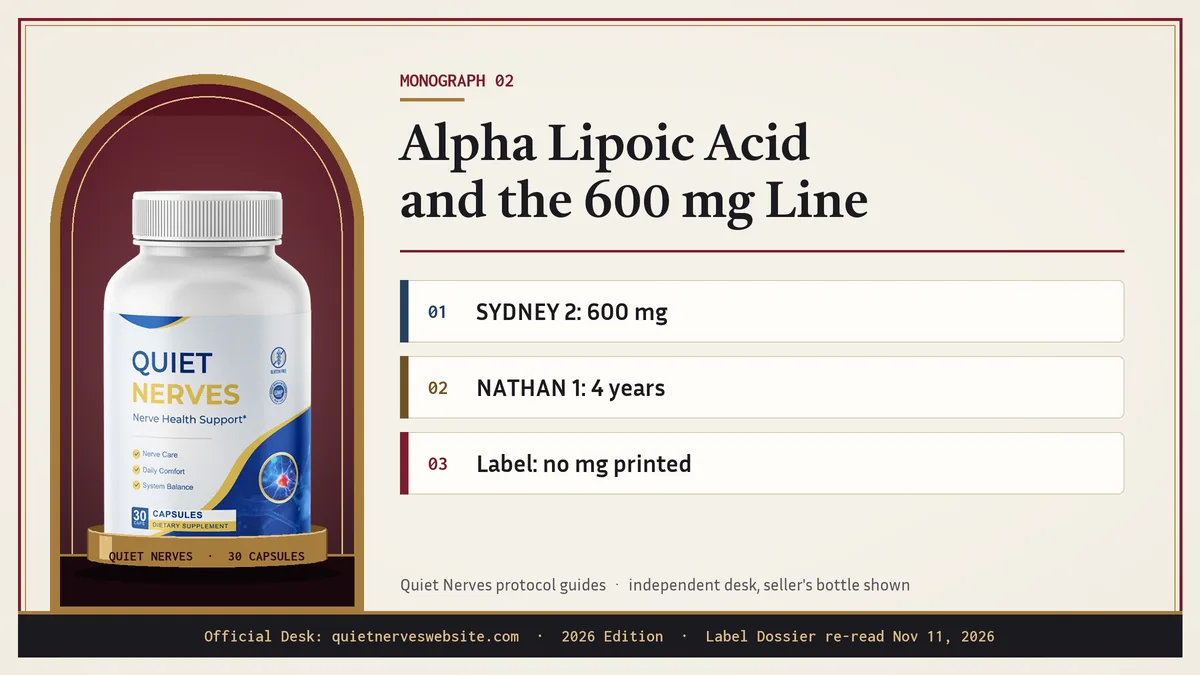
Human trials. The best oral evidence is SYDNEY 2: 181 patients with symptomatic diabetic polyneuropathy took 600, 1,200 or 1,800 mg once daily for five weeks; symptoms improved at every dose, and 600 mg was the best tolerated. [20] Earlier intravenous work, pooled in a meta-analysis of 1,258 patients, showed symptom improvement with 600 mg a day for three weeks. [21]
Neutral and negative results. ALADIN III (509 patients, intravenous dosing followed by 1,800 mg a day by mouth for six months) found no significant difference from placebo on the symptom score. [22] NATHAN 1 (460 patients, 600 mg a day for four years) missed its primary composite endpoint, although some deficit scores improved. [23] A meta-analysis of four trials called the intravenous benefit clinically relevant and the oral benefit unclear, [24] and the 2024 Cochrane review concluded that oral alpha lipoic acid probably makes little or no difference to neuropathy symptoms at six months. [25]
Dose check. Every one of those trials used 600 mg a day or more. The Quiet Nerves blend can hold at most about 8 mg under the strict reading and at most about 131 mg under the generous one: between 1.3% and 22% of the lowest studied dose, and only if nothing is left for the four ingredients listed after it.
Cautions. In pooled trials alpha lipoic acid modestly lowers fasting glucose and HbA1c, [26] which matters to anyone taking glucose-lowering medicine, and it is a recognized trigger of insulin autoimmune syndrome, a rare cause of low blood sugar. [27,28] Longer read: alpha lipoic acid and the 600 mg line.
Butcher's broom: studied for veins, never for nerves
What it is. Ruscus aculeatus is a spiny evergreen shrub; the medicinal part is the underground rhizome, whose marker compounds are steroidal saponins called ruscogenins. The label describes the ingredient as a root extract and gives no extract ratio and no ruscogenin content, so its strength cannot be judged. [4,29]
Recognized use. European regulators list butcher's broom as a traditional herbal medicine for discomfort and heaviness of the legs related to minor venous circulation problems, and for the itching and burning of hemorrhoids. [29] That is a vein indication. The seller's own description stays close to it, speaking of circulation in the lower limbs. [30]
Human trials. In a placebo-controlled trial in 166 women with chronic venous insufficiency, a Ruscus extract at 72 to 75 mg a day for 12 weeks reduced leg volume. [31] Most other trials tested a three-part product combining 150 mg of Ruscus extract with hesperidin methyl chalcone and vitamin C; a meta-analysis and a later systematic review of 10 randomized trials found improvements in venous symptoms and ankle swelling. [32,33]
Neutral and negative results. We found no human trial of butcher's broom for neuropathy, nerve pain or nerve conduction. The mechanistic work, such as studies of microvascular permeability in the hamster cheek pouch, is animal research. [34] Its place in a nerve formula rests on the inference that better circulation helps nerves, which no trial of this herb has tested.
Dose check. This is the one blend member whose ceiling could approach a studied weight, and only under the generous reading: at most about 65 mg against 72 to 75 mg. Under the strict reading the ceiling is 3.8 mg. Without an extract ratio or a ruscogenin figure, even a matching weight would not establish a matching dose.
Cautions. Published safety information comes from 12-week vein trials and the European monograph; data on long-term use are sparse. Longer read: butcher's broom, a vein herb in a nerve formula.
L-carnitine: the trials used a different molecule
What it is. Carnitine is made in the liver, kidneys and brain from the amino acids lysine and methionine, and it carries long-chain fatty acids into mitochondria to be burned for energy. Healthy adults make enough of their own, which is why it is classed as conditionally essential. The name covers several compounds, including L-carnitine, acetyl-L-carnitine and propionyl-L-carnitine. [35]
Absorption. Supplemental L-carnitine is poorly absorbed: 14 to 18% of an oral dose, compared with 54 to 87% of the carnitine in food. [36]
Human trials. Two 52-week randomized trials with 1,257 patients in total tested acetyl-L-carnitine at 500 or 1,000 mg three times a day; the 3,000 mg daily dose improved pain. [37] A year-long trial in 333 patients at 2,000 mg a day reported better nerve conduction and less pain. [38]
Neutral and negative results. A Cochrane review rated the certainty that acetyl-L-carnitine reduces diabetic neuropathy pain as very low. [39] In 409 women receiving taxane chemotherapy, 3,000 mg a day made neuropathy worse than placebo at 24 weeks, a result that should give anyone in cancer treatment pause. [40]
Dose check. L-carnitine is capped at 2.5 mg under the strict reading and about 44 mg under the generous one. Against the 1,500 to 3,000 mg used in trials of the acetyl form, that is under 3% in the best case, before the absorption figure is applied.
Cautions. At about 3 g a day, carnitine supplements can cause nausea, cramps, diarrhea and a fishy body odor. [35] Gut bacteria convert L-carnitine into a precursor of TMAO, a metabolite linked to atherosclerosis. [41] Reports describe potentiation of the anticoagulant acenocoumarol, and antagonism of thyroid hormone action at 2 to 4 g a day. [42,43] None of these effects is expected from a few milligrams, and that is the point: the dose is too small for the risks and for the benefits alike. Longer read: L-carnitine is not acetyl-L-carnitine.
Turmeric extract at 95% curcuminoids: potent on paper, poorly absorbed
What it is. The rhizome of Curcuma longa, extracted and standardized so that 95% of the extract is curcuminoids, the yellow polyphenols of which curcumin is the best known. The label states the standardization but not the amount of extract. [4] European regulators recognize turmeric as a traditional remedy for mild digestive complaints, not for nerve conditions. [44]
Absorption. This is curcumin's central problem: it is poorly absorbed and rapidly metabolized. [45] In volunteers, a 2 g dose taken alone was barely detectable in serum, while adding 20 mg of piperine raised bioavailability roughly twentyfold; [46] in a dose-escalation study, curcumin appeared in serum only after single doses of 10 to 12 g. [47] The Quiet Nerves label lists no piperine and no enhanced delivery form. U.S. health authorities make the same point in plainer words: curcumin's instability and low bioavailability make firm conclusions about benefits difficult. [48]
Human trials. The one randomized trial in neuropathy used nano-curcumin, a formulation engineered for uptake: 80 mg a day for eight weeks lowered neuropathy scores in 80 people with type 2 diabetes. [49] For joint symptoms, pooled trials used about 1 g of curcumin a day. [50]
Neutral and negative results. Beyond that single trial, the neuropathy literature for turmeric is preclinical; a 2023 systematic review covered animal models only. [51] A result obtained with an enhanced formulation cannot be transferred to a conventional 95% extract.
Dose check. The extract is capped at 1.9 mg under the strict reading and about 33 mg under the generous one, before the absorption problem is counted.
Longer read: turmeric 95% curcuminoids, absorbed?.
Coenzyme Q10 as ubiquinone: last in line
What it is. A fat-soluble quinone that sits in mitochondrial membranes, where it carries electrons in the chain that produces ATP, and that also acts as an antioxidant. The label specifies the oxidized form, ubiquinone. [4]
Absorption. Slow and fat-dependent: peak blood levels arrive about six hours after a dose, and the half-life is about 33 hours. [55] Taking it with a meal that contains some fat helps, which fits the seller's with-food advice.
Human trials. In 49 patients with diabetic polyneuropathy, 400 mg of ubiquinone a day for 12 weeks improved symptom and nerve conduction scores compared with placebo. [56] Outside neuropathy, 300 mg a day for two years was tested in heart failure in the Q-SYMBIO trial, [57] and 200 mg a day lowered blood pressure and HbA1c in a trial in type 2 diabetes. [58] A dose-response analysis placed the blood pressure effect at 100 to 200 mg a day. [59]
Neutral and negative results. The neuropathy evidence we rely on is a single 12-week trial in 49 people, which is thin by any standard. Nothing in it speaks to doses below 400 mg.
Dose check. Listed last, CoQ10 is the smallest component by rule: at most 1.5 mg under the strict reading and about 26 mg under the generous one, against 400 mg in the neuropathy trial. That is between 0.4% and 6.5%.
Cautions. CoQ10 has a wide safety margin, with an observed safe level of 1,200 mg a day in a formal safety assessment. [60] The standing question is warfarin: case reports describe a reduced anticoagulant effect, [61] while a controlled crossover trial of 100 mg a day found no change in warfarin dose or INR. [62] NCCIH continues to list warfarin and insulin as possible interactions. [63] Longer read: CoQ10 as ubiquinone versus the 400 mg trial.
Three things the capsule does not contain
Absences are worth stating because the sales copy invites assumptions.
No B vitamins. The seller's FAQ contrasts Quiet Nerves with products offering generic doses of B vitamins. [30] The label contains no B1, B6 or B12 in any form. That matters because B12 deficiency is one of the conditions clinicians test for first when someone has numb or tingling feet, [64] and long-term metformin use is a known cause of it. [65] A nerve formula without B12 will not correct a B12 problem.
No absorption enhancer. There is no piperine (black pepper extract) and no liposomal, phytosome or nano delivery form for the curcuminoids or the CoQ10. The panel lists a conventional 95% extract and plain ubiquinone. [4]
No sedative, stimulant or habit-forming compound. The six actives are a mineral, an antioxidant fatty acid, two botanical extracts, an amino acid derivative and a quinone. Nothing on the panel is a controlled substance, a sleep drug or caffeine, which is consistent with the seller's non-habit-forming statement. It also means the calmer, less jittery feeling described in the seller's testimonials has no obvious pharmacological source other than magnesium, whose evidence for anxiety is rated suggestive but poor. [12]
Ranking the six by what one capsule can deliver
| Rank | Ingredient | Why it sits here |
|---|---|---|
| 1 | Magnesium (as glycinate) | A printed, checkable 80 mg; 19% of the Daily Value; a modest but real addition to intake |
| 2 | Butcher's broom extract | Could near a vein-trial weight under the generous reading only; strength unstated; no nerve trials |
| 3 | Alpha lipoic acid | Best nerve evidence of the six, all of it at 600 mg or more; ceiling is 1.3% to 22% of that |
| 4 | Turmeric extract | A low ceiling compounded by poor absorption and no enhancer |
| 5 | Coenzyme Q10 | Smallest by rule; under 7% of the trial dose at best |
| 6 | L-carnitine | The wrong form for the trial record, and under 3% of the trial dose at best |
The practical question is price. At $1.63 to $2.80 a day depending on the pack, a buyer is paying for 80 mg of magnesium plus trace amounts of five other compounds, and stand-alone magnesium glycinate is one of the cheapest supplements on any shelf. Our pricing page runs that comparison with numbers you can edit, and how it works follows each ingredient through the biology the seller invokes. If you decide the capsule is still what you want, the seller's order page opens through our disclosed affiliate link, and the interaction checks in side effects are worth five minutes first.
Questions readers ask
What are the ingredients in Quiet Nerves?
Six actives: magnesium glycinate, alpha lipoic acid, butcher's broom root extract, L-carnitine, turmeric rhizome extract standardized to 95% curcuminoids, and coenzyme Q10 as ubiquinone. The label prints 80 mg of magnesium and groups everything, the magnesium compound included, in a 575 mg proprietary blend. The capsule shell and four flow agents make up the inactive ingredients. [4]
Does Quiet Nerves contain vitamin B12 or other B vitamins?
No. The label lists no B vitamin of any kind, although the seller's FAQ compares the product with formulas built on B vitamins. If low B12 is a possibility for you, for example after years on metformin, that needs a blood test and its own treatment. [65]
Is the L-carnitine in Quiet Nerves the same as acetyl-L-carnitine?
No. The label lists plain L-carnitine, while the neuropathy trials used acetyl-L-carnitine at 1,500 to 3,000 mg a day. The two are related but not interchangeable as evidence, and the blend can hold at most 2.5 to 44 mg of L-carnitine. [37]
How much alpha lipoic acid is in Quiet Nerves?
The amount is not printed. Label arithmetic caps it at about 8 mg if the magnesium glycinate is a fully reacted grade and about 131 mg if it is a buffered grade. The trials that support alpha lipoic acid for nerve symptoms used 600 mg a day or more. [20]
Does Quiet Nerves include black pepper extract to help absorb the turmeric?
No. The panel lists no piperine and no enhanced curcumin form. That matters because conventional curcumin is poorly absorbed: a 2 g dose taken alone was barely detectable in blood in volunteers. [46]
Is any ingredient in Quiet Nerves habit forming or a stimulant?
No. None of the six actives is a controlled substance, a sedative drug or a stimulant, and the formula contains no caffeine. The seller's non-habit-forming statement is consistent with the label.
Which ingredient in Quiet Nerves does the most?
Magnesium, by a wide margin. It is the only active with a printed amount (80 mg, 19% of the Daily Value) and the only one present at a level that is nutritionally meaningful. The other five are limited by the blend to amounts far below those used in human trials. [3]
References
Numbered in order of first citation on this page. Study records were checked against PubMed on November 11, 2026; seller documents are quoted as read on the same day.
- 21 CFR 101.36. Nutrition labeling of dietary supplements (proprietary blends listed in descending order of predominance by weight). Source
- Quiet Nerves. Scientific References page (eight citations). Read November 11, 2026. Source
- NIH Office of Dietary Supplements. Magnesium: Fact Sheet for Health Professionals. Updated January 6, 2026. Source
- Quiet Nerves. Bottle label artwork with Supplement Facts panel, as published on the seller's order page. Read November 11, 2026. Source
- Schuette SA, Lashner BA, Janghorbani M. Bioavailability of magnesium diglycinate vs magnesium oxide in patients with ileal resection. JPEN J Parenter Enteral Nutr. 1994;18(5):430-5. PMID 7815675. PubMed
- Walker AF, Marakis G, Christie S, et al. Mg citrate found more bioavailable than other Mg preparations in a randomised, double-blind study. Magnes Res. 2003;16(3):183-91. PMID 14596323. PubMed
- Firoz M, Graber M. Bioavailability of US commercial magnesium preparations. Magnes Res. 2001;14(4):257-62. PMID 11794633. PubMed
- Schuchardt JP, Hahn A. Intestinal Absorption and Factors Influencing Bioavailability of Magnesium-An Update. Curr Nutr Food Sci. 2017;13(4):260-278. PMID 29123461. PubMed
- Ranade VV, Somberg JC. Bioavailability and pharmacokinetics of magnesium after administration of magnesium salts to humans. Am J Ther. 2001;8(5):345-57. PMID 11550076. PubMed
- Abbasi B, Kimiagar M, Sadeghniiat K, et al. The effect of magnesium supplementation on primary insomnia in elderly: A double-blind placebo-controlled clinical trial. J Res Med Sci. 2012;17(12):1161-9. PMID 23853635. PubMed
- Mah J, Pitre T. Oral magnesium supplementation for insomnia in older adults: a Systematic Review & Meta-Analysis. BMC Complement Med Ther. 2021;21(1):125. PMID 33865376. PubMed
- Boyle NB, Lawton C, Dye L. The Effects of Magnesium Supplementation on Subjective Anxiety and Stress-A Systematic Review. Nutrients. 2017;9(5). PMID 28445426. PubMed
- De Leeuw I, Engelen W, De Block C, et al. Long term magnesium supplementation influences favourably the natural evolution of neuropathy in Mg-depleted type 1 diabetic patients (T1dm). Magnes Res. 2004;17(2):109-14. PMID 15319143. PubMed
- Pickering G, Morel V, Simen E, et al. Oral magnesium treatment in patients with neuropathic pain: a randomized clinical trial. Magnes Res. 2011;24(2):28-35. PMID 21659058. PubMed
- Garrison SR, Korownyk CS, Kolber MR, et al. Magnesium for skeletal muscle cramps. Cochrane Database Syst Rev. 2020;9(9):CD009402. PMID 32956536. PubMed
- Rondón LJ, Privat AM, Daulhac L, et al. Magnesium attenuates chronic hypersensitivity and spinal cord NMDA receptor phosphorylation in a rat model of diabetic neuropathic pain. J Physiol. 2010;588(Pt 21):4205-15. PMID 20837644. PubMed
- Papanas N, Ziegler D. Efficacy of α-lipoic acid in diabetic neuropathy. Expert Opin Pharmacother. 2014;15(18):2721-31. PMID 25381809. PubMed
- Teichert J, Hermann R, Ruus P, et al. Plasma kinetics, metabolism, and urinary excretion of alpha-lipoic acid following oral administration in healthy volunteers. J Clin Pharmacol. 2003;43(11):1257-67. PMID 14551180. PubMed
- Gleiter CH, Schug BS, Hermann R, et al. Influence of food intake on the bioavailability of thioctic acid enantiomers. Eur J Clin Pharmacol. 1996;50(6):513-4. PMID 8858282. PubMed
- Ziegler D, Ametov A, Barinov A, et al. Oral treatment with alpha-lipoic acid improves symptomatic diabetic polyneuropathy: the SYDNEY 2 trial. Diabetes Care. 2006;29(11):2365-70. PMID 17065669. PubMed
- Ziegler D, Nowak H, Kempler P, et al. Treatment of symptomatic diabetic polyneuropathy with the antioxidant alpha-lipoic acid: a meta-analysis. Diabet Med. 2004;21(2):114-21. PMID 14984445. PubMed
- Ziegler D, Hanefeld M, Ruhnau KJ, et al. Treatment of symptomatic diabetic polyneuropathy with the antioxidant alpha-lipoic acid: a 7-month multicenter randomized controlled trial (ALADIN III Study). ALADIN III Study Group. Alpha-Lipoic Acid in Diabetic Neuropathy. Diabetes Care. 1999;22(8):1296-301. PMID 10480774. PubMed
- Ziegler D, Low PA, Litchy WJ, et al. Efficacy and safety of antioxidant treatment with α-lipoic acid over 4 years in diabetic polyneuropathy: the NATHAN 1 trial. Diabetes Care. 2011;34(9):2054-60. PMID 21775755. PubMed
- Mijnhout GS, Kollen BJ, Alkhalaf A, et al. Alpha lipoic Acid for symptomatic peripheral neuropathy in patients with diabetes: a meta-analysis of randomized controlled trials. Int J Endocrinol. 2012;2012:456279. PMID 22331979. PubMed
- Baicus C, Purcarea A, von Elm E, et al. Alpha-lipoic acid for diabetic peripheral neuropathy. Cochrane Database Syst Rev. 2024;1(1):CD012967. PMID 38205823. PubMed
- Rahimlou M, Asadi M, Banaei Jahromi N, et al. Alpha-lipoic acid (ALA) supplementation effect on glycemic and inflammatory biomarkers: A Systematic Review and meta- analysis. Clin Nutr ESPEN. 2019;32:16-28. PMID 31221283. PubMed
- Censi S, Mian C, Betterle C. Insulin autoimmune syndrome: from diagnosis to clinical management. Ann Transl Med. 2018;6(17):335. PMID 30306074. PubMed
- Cappellani D, Sardella C, Campopiano MC, et al. Spontaneously remitting insulin autoimmune syndrome in a patient taking alpha-lipoic acid. Endocrinol Diabetes Metab Case Rep. 2018;2018. PMID 30532997. PubMed
- European Medicines Agency, Committee on Herbal Medicinal Products. Rusci rhizoma (butcher's broom): herbal monograph. Source
- Quiet Nerves. Sales page, ingredient descriptions, testimonials and FAQ. Read November 11, 2026. Source
- Vanscheidt W, Jost V, Wolna P, et al. Efficacy and safety of a Butcher's broom preparation (Ruscus aculeatus L. extract) compared to placebo in patients suffering from chronic venous insufficiency. Arzneimittelforschung. 2002;52(4):243-50. PMID 12040966. PubMed
- Boyle P, Diehm C, Robertson C. Meta-analysis of clinical trials of Cyclo 3 Fort in the treatment of chronic venous insufficiency. Int Angiol. 2003;22(3):250-62. PMID 14612852. PubMed
- Kakkos SK, Allaert FA. Efficacy of Ruscus extract, HMC and vitamin C, constituents of Cyclo 3 fort®, on improving individual venous symptoms and edema: a systematic review and meta-analysis of randomized double-blind placebo-controlled trials. Int Angiol. 2017;36(2):93-106. PMID 28225220. PubMed
- Bouskela E, Cyrino FZ, Marcelon G. Possible mechanisms for the inhibitory effect of Ruscus extract on increased microvascular permeability induced by histamine in hamster cheek pouch. J Cardiovasc Pharmacol. 1994;24(2):281-5. PMID 7526061. PubMed
- NIH Office of Dietary Supplements. Carnitine: Fact Sheet for Health Professionals. Source
- Rebouche CJ. Kinetics, pharmacokinetics, and regulation of L-carnitine and acetyl-L-carnitine metabolism. Ann N Y Acad Sci. 2004;1033:30-41. PMID 15591001. PubMed
- Sima AA, Calvani M, Mehra M, et al. Acetyl-L-carnitine improves pain, nerve regeneration, and vibratory perception in patients with chronic diabetic neuropathy: an analysis of two randomized placebo-controlled trials. Diabetes Care. 2005;28(1):89-94. PMID 15616239. PubMed
- De Grandis D, Minardi C. Acetyl-L-carnitine (levacecarnine) in the treatment of diabetic neuropathy. A long-term, randomised, double-blind, placebo-controlled study. Drugs R D. 2002;3(4):223-31. PMID 12455197. PubMed
- Rolim LC, da Silva EM, Flumignan RL, et al. Acetyl-L-carnitine for the treatment of diabetic peripheral neuropathy. Cochrane Database Syst Rev. 2019;6(6):CD011265. PMID 31201734. PubMed
- Hershman DL, Unger JM, Crew KD, et al. Randomized double-blind placebo-controlled trial of acetyl-L-carnitine for the prevention of taxane-induced neuropathy in women undergoing adjuvant breast cancer therapy. J Clin Oncol. 2013;31(20):2627-33. PMID 23733756. PubMed
- Koeth RA, Wang Z, Levison BS, et al. Intestinal microbiota metabolism of L-carnitine, a nutrient in red meat, promotes atherosclerosis. Nat Med. 2013;19(5):576-85. PMID 23563705. PubMed
- Martinez E, Domingo P, Roca-Cusachs A. Potentiation of acenocoumarol action by L-carnitine. J Intern Med. 1993;233(1):94. PMID 8429297. PubMed
- Benvenga S, Ruggeri RM, Russo A, et al. Usefulness of L-carnitine, a naturally occurring peripheral antagonist of thyroid hormone action, in iatrogenic hyperthyroidism: a randomized, double-blind, placebo-controlled clinical trial. J Clin Endocrinol Metab. 2001;86(8):3579-94. PMID 11502782. PubMed
- European Medicines Agency, Committee on Herbal Medicinal Products. Curcumae longae rhizoma (turmeric): herbal monograph. Source
- Anand P, Kunnumakkara AB, Newman RA, et al. Bioavailability of curcumin: problems and promises. Mol Pharm. 2007;4(6):807-18. PMID 17999464. PubMed
- Shoba G, Joy D, Joseph T, et al. Influence of piperine on the pharmacokinetics of curcumin in animals and human volunteers. Planta Med. 1998;64(4):353-6. PMID 9619120. PubMed
- Lao CD, Ruffin MT 4th, Normolle D, et al. Dose escalation of a curcuminoid formulation. BMC Complement Altern Med. 2006;6:10. PMID 16545122. PubMed
- National Center for Complementary and Integrative Health. Turmeric: Usefulness and Safety. Source
- Asadi S, Gholami MS, Siassi F, et al. Nano curcumin supplementation reduced the severity of diabetic sensorimotor polyneuropathy in patients with type 2 diabetes mellitus: A randomized double-blind placebo- controlled clinical trial. Complement Ther Med. 2019;43:253-260. PMID 30935539. PubMed
- Daily JW, Yang M, Park S. Efficacy of Turmeric Extracts and Curcumin for Alleviating the Symptoms of Joint Arthritis: A Systematic Review and Meta-Analysis of Randomized Clinical Trials. J Med Food. 2016;19(8):717-29. PMID 27533649. PubMed
- Silveira RS, Baldoni AO, Couto RO, et al. In vivo efficacy of turmeric (Curcuma longa L.) in the treatment of peripheral neuropathy: A systematic review of animal models. An Acad Bras Cienc. 2023;95(3):e20200447. PMID 37937613. PubMed
- Halegoua-DeMarzio D, Navarro V, Ahmad J, et al. Liver Injury Associated with Turmeric-A Growing Problem: Ten Cases from the Drug-Induced Liver Injury Network [DILIN]. Am J Med. 2023;136(2):200-206. PMID 36252717. PubMed
- LiverTox: Clinical and Research Information on Drug-Induced Liver Injury. Turmeric. National Institute of Diabetes and Digestive and Kidney Diseases. PMID 31643876. Source
- Liu AC, Zhao LX, Lou HX. Curcumin alters the pharmacokinetics of warfarin and clopidogrel in Wistar rats but has no effect on anticoagulation or antiplatelet aggregation. Planta Med. 2013;79(11):971-7. PMID 23807811. PubMed
- Bhagavan HN, Chopra RK. Coenzyme Q10: absorption, tissue uptake, metabolism and pharmacokinetics. Free Radic Res. 2006;40(5):445-53. PMID 16551570. PubMed
- Hernández-Ojeda J, Cardona-Muñoz EG, Román-Pintos LM, et al. The effect of ubiquinone in diabetic polyneuropathy: a randomized double-blind placebo-controlled study. J Diabetes Complications. 2012;26(4):352-8. PMID 22595020. PubMed
- Mortensen SA, Rosenfeldt F, Kumar A, et al. The effect of coenzyme Q10 on morbidity and mortality in chronic heart failure: results from Q-SYMBIO: a randomized double-blind trial. JACC Heart Fail. 2014;2(6):641-9. PMID 25282031. PubMed
- Hodgson JM, Watts GF, Playford DA, et al. Coenzyme Q10 improves blood pressure and glycaemic control: a controlled trial in subjects with type 2 diabetes. Eur J Clin Nutr. 2002;56(11):1137-42. PMID 12428181. PubMed
- Zhao D, Liang Y, Dai S, et al. Dose-Response Effect of Coenzyme Q10 Supplementation on Blood Pressure among Patients with Cardiometabolic Disorders: A Grading of Recommendations Assessment, Development, and Evaluation (GRADE)-Assessed Systematic Review and Meta-Analysis of Randomized Controlled Trials. Adv Nutr. 2022;13(6):2180-2194. PMID 36130103. PubMed
- Hidaka T, Fujii K, Funahashi I, et al. Safety assessment of coenzyme Q10 (CoQ10). Biofactors. 2008;32(1-4):199-208. PMID 19096117. PubMed
- Heck AM, DeWitt BA, Lukes AL. Potential interactions between alternative therapies and warfarin. Am J Health Syst Pharm. 2000;57(13):1221-7; quiz 1228-30. PMID 10902065. PubMed
- Engelsen J, Nielsen JD, Hansen KF. [Effect of Coenzyme Q10 and Ginkgo biloba on warfarin dosage in patients on long-term warfarin treatment. A randomized, double-blind, placebo-controlled cross-over trial]. Ugeskr Laeger. 2003;165(18):1868-71. PMID 12772396. PubMed
- National Center for Complementary and Integrative Health. Coenzyme Q10. Source
- England JD, Gronseth GS, Franklin G, et al. Practice Parameter: evaluation of distal symmetric polyneuropathy: role of laboratory and genetic testing (an evidence-based review). Report of the American Academy of Neurology, American Association of Neuromuscular and Electrodiagnostic Medicine, and American Academy of Physical Medicine and Rehabilitation. Neurology. 2009;72(2):185-92. PMID 19056666. PubMed
- Aroda VR, Edelstein SL, Goldberg RB, et al. Long-term Metformin Use and Vitamin B12 Deficiency in the Diabetes Prevention Program Outcomes Study. J Clin Endocrinol Metab. 2016;101(4):1754-61. PMID 26900641. PubMed